
Description
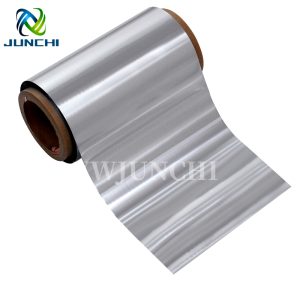
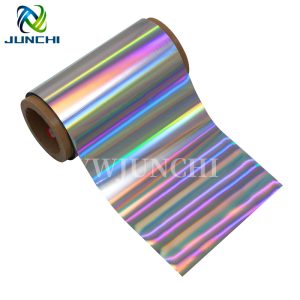
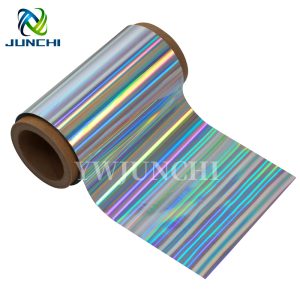
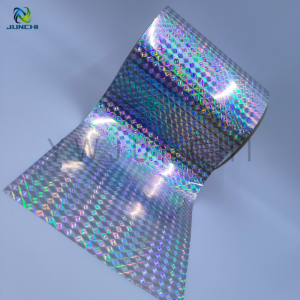
Z08 Grain Pillar Light Horizontal PET Hologram Film
In the high-end packaging and printing industry,grain pillar light horizontal PET hologram film has emerged as a popular choice for its unique grain pillar light effect,stable processing performance and wide applicability.This article focuses on the 16-micron grain pillar light horizontal PET hologram film,including its product types,core characteristics,production highlights and typical application scenarios,providing a comprehensive guide for manufacturers,processors and end-users in related fields.
1.Types and Core Specifications
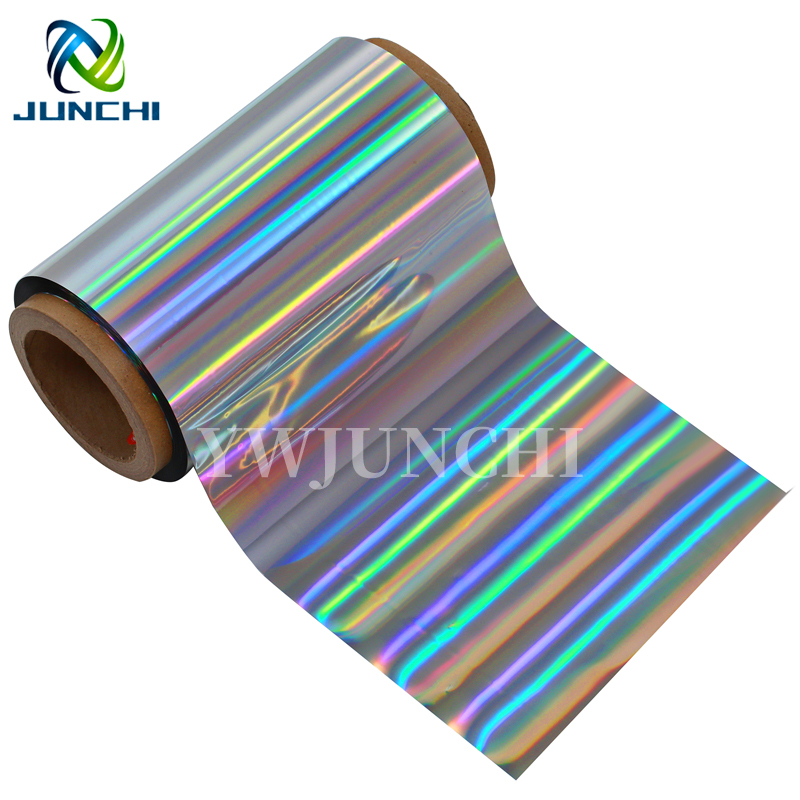
The grain pillar light horizontal PET hologram film is a high-value-added packaging material,which takes polyethylene terephthalate (PET) as the base material,adopts advanced horizontal holographic embossing technology to form a grain pillar light texture,and is processed into two main types to meet different application needs.Its core thickness is strictly controlled at 16 microns,a specification that achieves an ideal balance between flexibility and mechanical strength,making it perfectly suitable for lamination and transfer processes on paperboard.
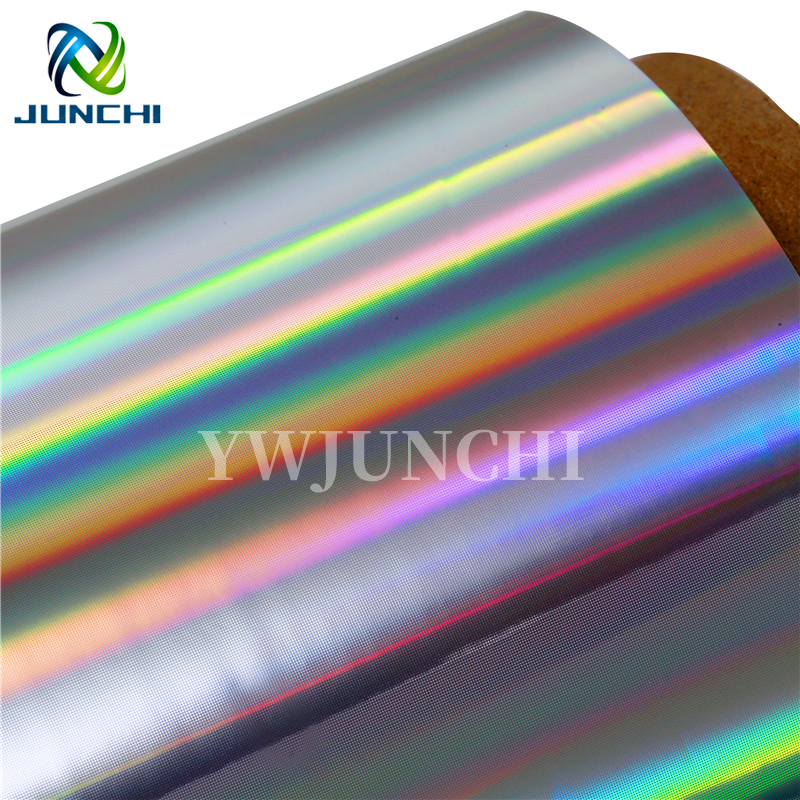
Unlike ordinary hologram films,this product features a unique grain pillar light effect- the surface presents a delicate grain-like pillar texture,which can reflect soft and layered light under different angles,bringing a distinctive visual experience that is both elegant and eye-catching.It mainly includes two types:lamination holographic film and transfer holographic film.The lamination type is designed for direct compounding with paperboard, while the transfer type is suitable for transferring the holographic texture and light effect to paperboard surfaces,both maintaining the integrity of the grain pillar light effect. Additionally,the film is UV printable,which further expands its processing and application possibilities.
2.Product Types and Key Characteristics
The 16-micron grain pillar light horizontal PET hologram film is divided into two core types,each with targeted characteristics to adapt to different processing requirements,while sharing the same high-quality base performance:
2.1 Lamination Holographic Film
This type of film is specially designed for lamination with paperboard. It has excellent adhesion performance, and after compounding with paperboard through professional lamination equipment,it can firmly attach to the surface without peeling or bubbling.The lamination process not only retains the complete grain pillar light holographic effect but also enhances the surface smoothness and wear resistance of the paperboard, making the final product more durable and high-grade.
2.2 Transfer Holographic Film
The transfer type is mainly used for transferring the grain pillar light holographic texture to paperboard. It adopts a special coating technology,which allows the holographic layer to be easily transferred to the paperboard surface during the transfer process,while the PET base film can be recycled,reducing material waste and lowering production costs.The transferred paperboard has a natural and delicate grain pillar light effect,with the same visual effect as the lamination type but more flexible in application.
2.3 Common Core Characteristics
Both types of film share the following key characteristics:16-micron thickness ensures good flexibility and processability,suitable for various paperboard lamination and transfer equipment; horizontal grain pillar light texture is consistent with the processing direction of packaging production lines,reducing material loss and improving production efficiency;UV printable performance allows direct printing of patterns,logos and text on the film surface,with clear printing effect and strong color fastness;excellent chemical stability,not easy to fade or deform,ensuring the long-term stability of the product appearance.
3.Production Process: Focus on Texture and Performance
The production of grain pillar light horizontal PET hologram film requires precise control of each process,especially focusing on the formation of grain pillar light texture and the optimization of lamination/transfer performance.The main production steps are as follows:
3.1 Base Film Preparation
High-quality PET resin is selected as the raw material,which is melted, extruded and horizontally stretched to form a 16-micron thick PET base film.During the stretching process,the temperature and stretching ratio are strictly controlled to ensure the base film has good dimensional stability and tensile strength,providing a reliable carrier for the subsequent holographic embossing process.
3.2 Grain Pillar Light Holographic Embossing
The prepared PET base film is sent to a high-precision holographic embossing machine,where a horizontal grain pillar light pattern is pressed onto the film surface using a special embossing roller.The embossing parameters (temperature, pressure, speed) are precisely adjusted to ensure that the grain pillar texture is clear,uniform and three-dimensional,and the light reflection effect meets the standard.The horizontal direction of the texture is consistent with the film’s processing direction,which is conducive to subsequent lamination,transfer and UV printing operations.
3.3 Functional Coating and Post-Treatment
According to the product type (lamination or transfer),a corresponding functional coating is applied to the embossed film surface.For lamination holographic film,an adhesive layer is coated to enhance its adhesion to paperboard; for transfer holographic film,a release layer and a transfer layer are coated to ensure smooth transfer of the holographic texture.After coating,the film undergoes corona treatment to improve surface energy,enhancing the compatibility with UV inks and ensuring good printing effect.Finally,the film is slit into rolls of different widths according to customer requirements,and strict quality inspection is carried out.
4.Key Product Advantages
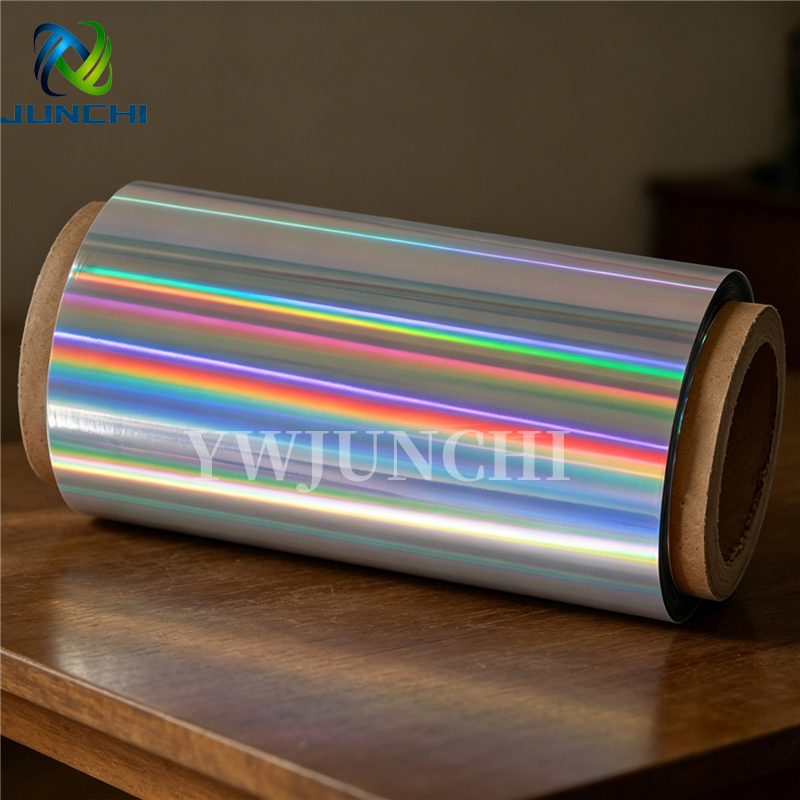
Unique Visual Effect:The grain pillar light texture brings a distinctive layered light reflection effect,which is more attractive than ordinary hologram films,helping products stand out in the market.
Dual Type Options:Lamination and transfer types are available,adapting to different processing needs and production costs,providing flexible choices for users.
Optimal Thickness:16 microns thickness balances flexibility and strength,easy to laminate or transfer to paperboard,compatible with most packaging processing equipment.
UV Printable:Compatible with UV printing technology,allowing direct printing of various patterns and text,enriching the product’s visual expression and meeting personalized packaging needs.
Wide Applicability:Suitable for various high-end packaging fields,with stable performance and excellent durability,ensuring the quality of the final product.
5.Application Scenarios
The 16-micron grain pillar light horizontal PET hologram film (including lamination and transfer types) is widely used in packaging fields that pursue high-grade and distinctive visual effects, with the following typical application scenarios:
5.1 Sticker Label Production
It is an ideal material for high-end sticker labels.The grain pillar light effect makes the labels more eye-catching,and the UV printable performance allows printing of brand logos,product information and other content.It is widely used in high-end commodity labels,such as luxury goods,cosmetics and high-end food labels.
5.2 Cosmetics Packaging
In the cosmetics industry,this film is widely used in the packaging of skin care products,makeup,perfumes and other products.It can be laminated or transferred to cosmetic boxes,bottle labels and outer packaging bags,bringing a noble and fashionable visual effect to the products,enhancing the brand image and product grade.
5.3 Tobacco Box Packaging
As a high-end packaging material,it is also suitable for tobacco box packaging.The grain pillar light effect enhances the texture and grade of the tobacco box,and the excellent durability and stability ensure that the packaging remains intact during transportation and storage.It is widely used in high-grade cigarette packaging.
5.4 Other High-End Packaging Fields
In addition to the above scenarios,it can also be used in the packaging of high-end gifts,health products,electronic products and other fields,meeting the market’s demand for high-quality, distinctive packaging materials.
6.Quality Control and Storage Requirements
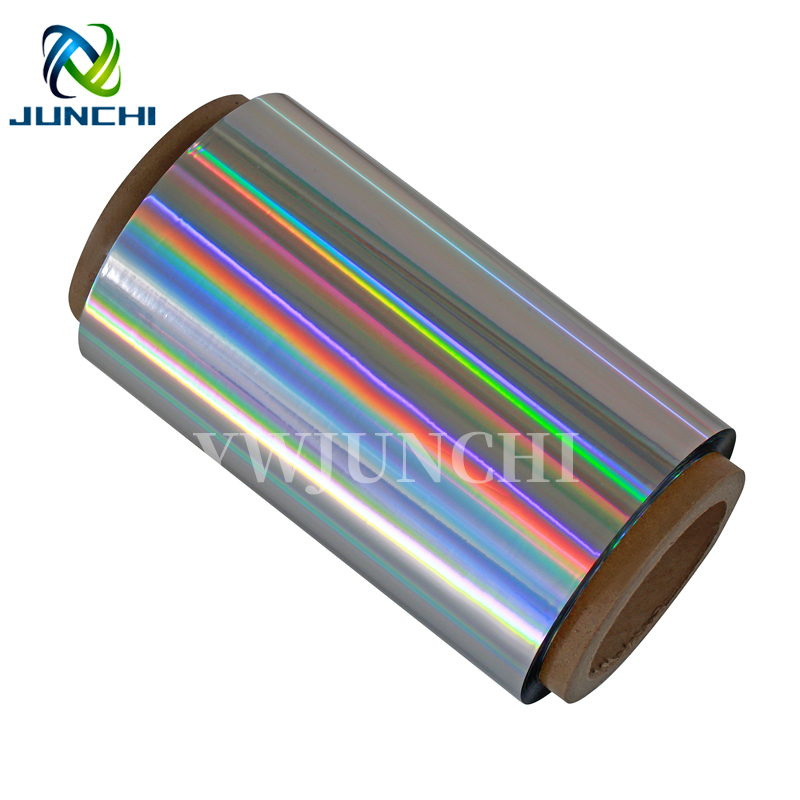
In the production process,strict quality control is implemented for each link,including raw material inspection,thickness detection, grain pillar light effect inspection,coating uniformity inspection and surface quality inspection,to ensure that each roll of film meets the relevant industry standards.For storage,the film should be placed in a dry,cool and ventilated warehouse, avoiding direct sunlight, high temperature and humidity,and preventing the film from being damp,deformed or damaged.The storage temperature should be controlled between 15℃ and 25℃,and the relative humidity should not exceed 60%.
7.Conclusion
The 16-micron grain pillar light horizontal PET hologram film,with its unique grain pillar light effect,dual type options (lamination and transfer),UV printable performance and wide applicability,has become an important material in the high-end packaging industry.It not only meets the aesthetic and functional needs of various products but also helps enterprises enhance their brand competitiveness.With the continuous upgrading of packaging consumption demand,this product will have broader application prospects in mor
Reviews
There are no reviews yet.